When and Why Would You Need an Excision Biopsy?
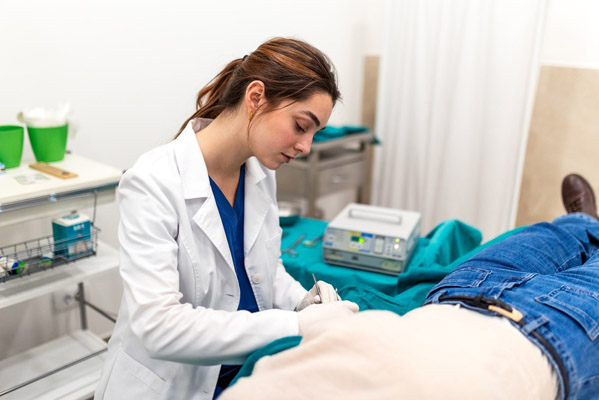
An excisional biopsy enables a surgical team to remove a suspicious lump or skin lesion and submit the entire specimen to a laboratory for definitive diagnosis. In general surgery, this diagnosis supports accurate answers for the patient when imaging or office-based sampling does not provide sufficient certainty. It also helps guide next steps, whether the results show a benign condition, inflammation, or cancerous changes.
What an excision biopsy is and how it differs from other biopsies
An excision biopsy removes the full lesion or mass rather than taking only a small piece. This matters when a complete view of the tissue architecture improves diagnostic accuracy. By examining the entire specimen, a pathologist can measure margins, identify cell patterns, and detect changes that might be missed in a limited sample.
Other biopsy methods may remove only a portion of the tissue. A needle biopsy, for example, can be effective for many lumps but may yield an inconclusive result if the sample does not capture the most abnormal area. When that occurs, general surgery often recommends an excision approach to reduce uncertainty and prevent delays in care.
When general surgery recommends an excision biopsy
A surgeon may recommend an excision biopsy when a growth looks concerning, changes over time, or causes symptoms such as pain, bleeding, or irritation. It may also be appropriate when a mass remains unexplained after an examination, ultrasound, mammography, CT, or MRI. Some masses are located in sites where complete removal of the lesion provides the safest and most definitive path to diagnosis.
An excisional approach may also be indicated when a prior biopsy result conflicts with clinical findings. If imaging suggests a problem but the earlier tissue sample looks benign, removing the entire area can clarify the diagnosis. This strategy supports careful decision-making and helps avoid both under-treatment and unnecessary worry.
Common reasons an excision biopsy gets performed
General surgery commonly employs this procedure to evaluate soft-tissue masses, lymph nodes, breast lumps, and suspicious skin lesions. The goal remains the same: obtain enough tissue to answer the diagnostic question with confidence.
Common situations include:
- A lump that grows, feels firm, or has irregular borders
- A pigmented or non-healing skin lesion that changes color, shape, or size
- An enlarged lymph node that persists without a clear infection-related cause
Any of these situations warrants a consultation with a general practitioner or surgeon. A primary care physician will often refer patients to the qualifying specialist if concerns arise.
What to expect before, during, and after the procedure
Some patients require laboratory testing or medication adjustments, especially when blood thinners are involved. The surgical team also explains where the incision goes, what type of anesthesia fits the situation, and how the specimen gets handled.
During an excisional biopsy, the surgeon removes the tissue and closes the incision, typically under local anesthesia, depending on the site and size. Afterward, the incision site needs basic wound care and activity modifications for a short period. Pathology results are often returned within several business days, and a follow-up visit reviews the findings and discusses next steps.
Why timely evaluation matters
A timely excision biopsy can provide a clear diagnosis when imaging or limited sampling does not. Results guide next steps, whether monitoring, additional treatment, or reassurance. A general surgery evaluation helps confirm whether excision offers the safest, most definitive approach. If a new lump, changing lesion, or persistent swelling appears, a general surgery consultation can determine whether an excision biopsy fits the clinical picture and supports a safe, informed plan. For more information or to schedule an appointment, call our office.
To schedule a consultation, please request an appointment on our website at https://aigsca.com or call Associates in General Surgery at (562) 424-0421 to arrange an appointment at our Long Beach office.
Check out what others are saying about our services on Yelp: Read our Yelp reviews.
Related Posts
A general surgeon helps diagnose and treat hernias using proven repair techniques that restore strength to the affected area. Hernias often cause a visible bulge, pressure, or discomfort that worsens with lifting, coughing, or prolonged standing. While some hernias feel mild at first, they can enlarge and lead to complications without proper care. A timely…
Getting a procedure done several years ago meant something very different from what it does today. Thanks to advancements in science and technology, laparoscopic surgery has transformed the field of general surgery. It relies on carefully coordinated technologies and biological responses, distinguishing it from traditional open techniques. Laparoscopic surgery allows general surgeons to perform minimally…
An umbilical hernia can feel worrying at first. Fortunately, it often responds well to treatment. Umbilical hernia surgery gives patients a safe, reliable way to repair this condition near the belly button and restore confidence in core strength and comfort. This procedure can be particularly beneficial for adults who notice a bulge that does not…
A cholecystectomy is a surgical procedure performed to remove the gallbladder, which is a small organ located beneath the liver. The gallbladder stores bile, a digestive fluid that helps break down fats. When your gallbladder is diseased or causes discomfort, a general surgeon may recommend a cholecystectomy to restore your digestive health and prevent further…